




Time:2026-03-27 Views:73
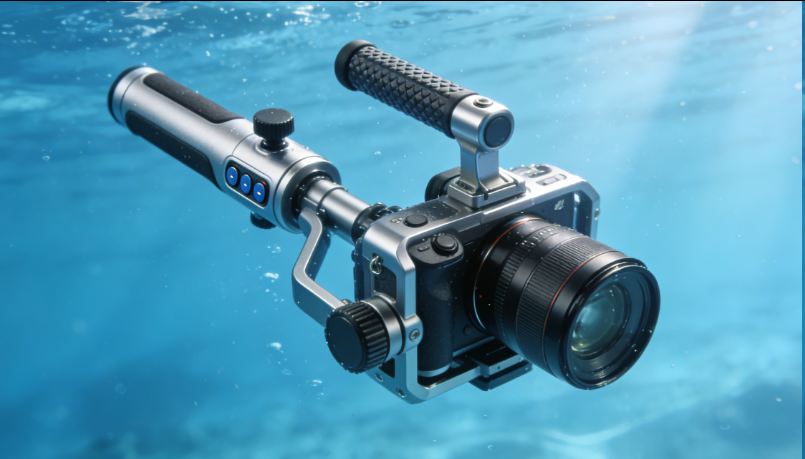
Underwater camera stabilizers are essential tools designed to counteract the unique challenges of capturing smooth, steady footage beneath the water’s surface. Unlike terrestrial shooting, underwater environments present constant disruptions—water currents, wave movement, and the natural shakiness of a diver’s hands—all of which can turn crisp, professional footage into blurry, unwatchable clips. These stabilizers are engineered to mitigate these issues, using advanced technology and rugged designs to ensure that every shot, whether of marine life, coral reefs, or underwater landscapes, remains stable and visually appealing. Whether you’re a professional videographer documenting marine ecosystems or a hobbyist capturing memories during a snorkeling trip, an underwater stabilizer elevates the quality of your content by eliminating unwanted motion and allowing you to focus on framing the perfect shot.
There are several types of underwater camera stabilizers, each tailored to different shooting scenarios and equipment needs. Handheld gimbal stabilizers are the most popular, featuring gyroscope sensors that detect and counteract pitch, roll, and yaw movements in real time, providing 3-axis stabilization that keeps footage smooth even in strong currents. These gimbals are typically lightweight and compact, making them easy to maneuver underwater while wearing dive gear. Float grippers, another common type, serve a dual purpose: they stabilize the camera and provide buoyancy control, ensuring the camera stays afloat if dropped and reducing fatigue during long dives. For more specialized use cases, ball joint stabilizers offer flexible positioning, allowing divers to adjust the camera’s angle to capture unique perspectives, while cylinder stabilizers use counterweights to balance the camera and minimize the effects of water turbulence. All high-quality underwater stabilizers are built with corrosion-resistant materials, such as aluminum alloy or durable plastics, and feature waterproof ratings of at least 30 meters (100 feet), ensuring they can withstand the pressure and harsh conditions of underwater environments. Additionally, many modern stabilizers offer wireless control and compatibility with action cameras, mirrorless cameras, and professional underwater housings, making them versatile tools for any underwater shooter.
Read recommendations:
5 Axis Cnc Milling Machines Cnc Machined Aluminum Alloy Parts Turning
© 2024 Jiani Digital Technology Co., Ltd. All rights reserved Powered by Nbone


 Home >


