




Time:2025-12-19 Views:1
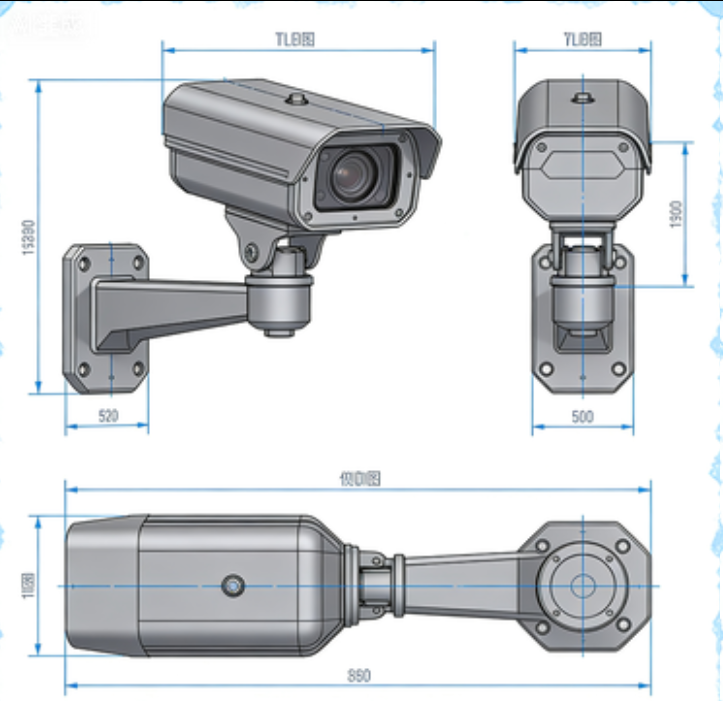
Surveillance camera brackets are specialized mounting structures designed to secure and position surveillance cameras (e.g., IP cameras, analog cameras, dome cameras) in various environments—residential, commercial, industrial, or public spaces. Unlike generic camera stands, these brackets prioritize stability, adjustability, and compatibility with different camera models, ensuring optimal viewing angles for monitoring (e.g., wide coverage of entry points, focused tracking of high-traffic areas). They must withstand long-term use (5-10 years) while supporting camera weights ranging from 0.5kg (small dome cameras) to 5kg (heavy bullet cameras with night vision modules). The core role of surveillance camera brackets is to enhance the effectiveness of security systems by maintaining consistent camera positioning, protecting cameras from physical damage, and enabling easy maintenance.
Key design features of surveillance camera brackets include:
Adjustable Positioning Mechanisms: To achieve flexible viewing angles, brackets integrate multi-axis adjustment: pan (horizontal rotation, 0°-360°), tilt (vertical rotation, 0°-90°), and swivel (side-to-side rotation, ±45°). For example, wall-mounted brackets often use a ball-and-socket joint or hinge system that allows precise angle tuning—critical for covering blind spots (e.g., corners of a building). Ceiling-mounted brackets may include a telescopic pole (adjustable length: 30cm-150cm) to lower or raise cameras, adapting to high ceilings in warehouses or retail stores. Some advanced brackets feature motorized adjustment (controlled via a security system) for remote angle changes, eliminating the need for manual repositioning.
Material Durability and Load Capacity: Brackets are constructed from robust materials to support camera weight and resist wear: aluminum alloy (lightweight, corrosion-resistant, ideal for most indoor/outdoor use), stainless steel (high strength, suitable for heavy cameras or industrial environments), or reinforced plastic (cost-effective for lightweight indoor cameras). The load capacity is clearly rated—e.g., a 2kg-rated bracket for small dome cameras, a 5kg-rated bracket for bullet cameras with built-in heaters. Materials undergo surface treatments: anodized aluminum (prevents rust), powder coating (resists scratches and UV damage), or galvanized steel (for extreme outdoor conditions like coastal areas with saltwater exposure).
Compatibility with Camera Types: Surveillance brackets are designed to fit specific camera mounting standards: 1/4-inch UNC threads (universal for most small cameras), 3/8-inch UNC threads (for larger cameras), or custom mounting plates (for proprietary dome or PTZ cameras). Some brackets include adapter plates or adjustable clamps to accommodate multiple camera sizes—e.g., a single bracket that fits both 4-inch and 6-inch dome cameras. Wall-mounted brackets may have slotted holes (for horizontal adjustment during installation), while pole-mounted brackets use U-bolts or hose clamps to attach to poles (diameter 5cm-15cm).
Security and Anti-Tampering Features: To prevent theft or vandalism, brackets include anti-tampering designs: security screws (requiring a special tool to remove), locked adjustment knobs (preventing unauthorized angle changes), or enclosed mounting plates (hiding screws from view). For outdoor use, brackets may have cable management channels (to route power and data cables through the bracket, reducing cable exposure and tampering risks). Some industrial brackets include vibration-dampening components (e.g., rubber gaskets) to stabilize cameras in high-vibration environments (e.g., factories with heavy machinery), ensuring clear footage.
Installation versatility is key: brackets support multiple mounting surfaces—walls (concrete, drywall, brick), ceilings (suspended, solid), poles (wood, metal), or ceilings (drop ceilings). They comply with safety standards (e.g., UL 94 for flame resistance, IP ratings for outdoor use) and are tested for environmental durability (temperature ranges: -40°C to +85°C for outdoor brackets). By combining adjustability, durability, and security, surveillance camera brackets form a critical component of reliable security systems.
Read recommendations:
© 2024 Jiani Digital Technology Co., Ltd. All rights reserved Powered by Nbone


 Home >


